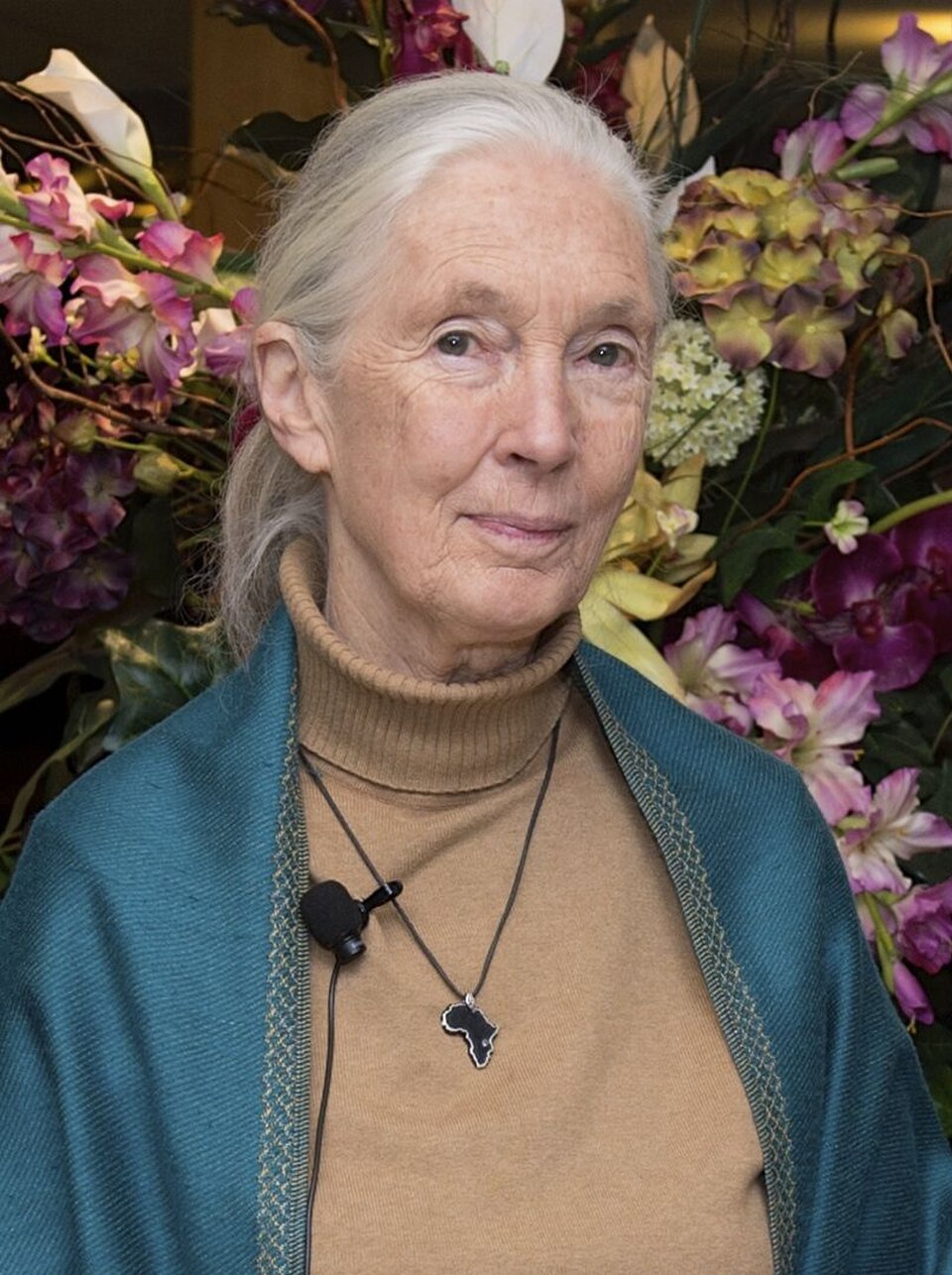
Jane Goodall’s routine is really two routines connected by the same temperament.
The young Goodall rose into fieldwork, patient observation, and hours shaped by the rhythms of animals and weather. The older Goodall has spent decades writing, speaking, traveling, and advocating while still trying to hold onto the same attentiveness that made the original work possible.
That continuity is what makes her life worth studying.
Jane Goodall’s day at a glance
- Early morning: tea, reading, writing, or preparation for travel and appearances
- Daytime: interviews, advocacy, meetings, and field-related work
- When possible: time outdoors, walking, and close observation of animals
- Ongoing: keep curiosity active instead of letting fame flatten it
- Ongoing: use routine to protect attention, not deaden it
Her early life gave the whole routine its center
Goodall’s fascination with animals started so young that it almost feels like part of her native wiring. The famous henhouse story matters because it captures the exact trait that later made her work unusual: she was willing to wait, watch, and learn instead of forcing a quick answer.
She also grew up dreaming of Africa long before she could realistically get there. That long runway of fascination matters. The adult routine of dawn fieldwork and later advocacy did not begin with a career opportunity. It began with a child whose attention already moved toward living things.
The original routine was built on patience
At Gombe, Goodall’s most important skill was not aggression or speed.
It was patience.
She spent long hours observing chimpanzees closely enough to notice personalities, relationships, and behavior many experts had missed or dismissed. That kind of work depends on a particular daily rhythm. Quiet. Repetition. Watching without forcing.
Here is the thing: a lot of people say they want insight, but they arrange their days so nothing can be observed long enough to become clear.
Goodall’s early routine did the opposite.
Childhood curiosity turned into adult method
One of the most repeated stories from Goodall’s life is that as a little girl she hid for hours in a henhouse so she could figure out how chickens lay eggs.
That story survives because it sounds charming, but it also sounds structurally true. The patience was there early.
Later, that same disposition became scientific value. She kept looking long enough for the world to reveal more than the first assumption.
A field notebook or compact binoculars fit naturally into a life like that because the work depends on noticing details before they vanish.
Related video: Jane Goodall reflecting on fieldwork, memory, and the life she built around observation.
The later routine became one of movement and advocacy
As her work expanded, the schedule changed dramatically.
The woman who once spent long stretches in one place became one of the world’s most visible conservation advocates, often traveling constantly. That could have broken the connection to the original work. Instead, she kept returning to the same themes: close attention, reverence for life, and hope tied to action.
That evolution matters. A routine can change shape completely while preserving its core values.
Wonder stayed practical
Goodall’s public voice is often described as hopeful, but it is not soft hope.
It is hope attached to work. Education. Conservation. Speaking. Fundraising. Writing. Showing up again.
What this really means is that wonder is not the opposite of discipline. In the best cases, discipline is what protects wonder from getting crowded out.
What you can borrow from Jane Goodall
- Slow down long enough to actually observe what you care about.
- Let childhood curiosity mature into adult practice.
- Keep time outdoors if you want perspective to stay alive.
- Allow routines to evolve while keeping the same core values.
- Tie hope to action so it does not become sentimentality.
Jane Goodall’s routine works because it keeps attention honest.
She has spent a lifetime looking closely, then acting on what she saw.
_(2)_(cropped_2).jpg)