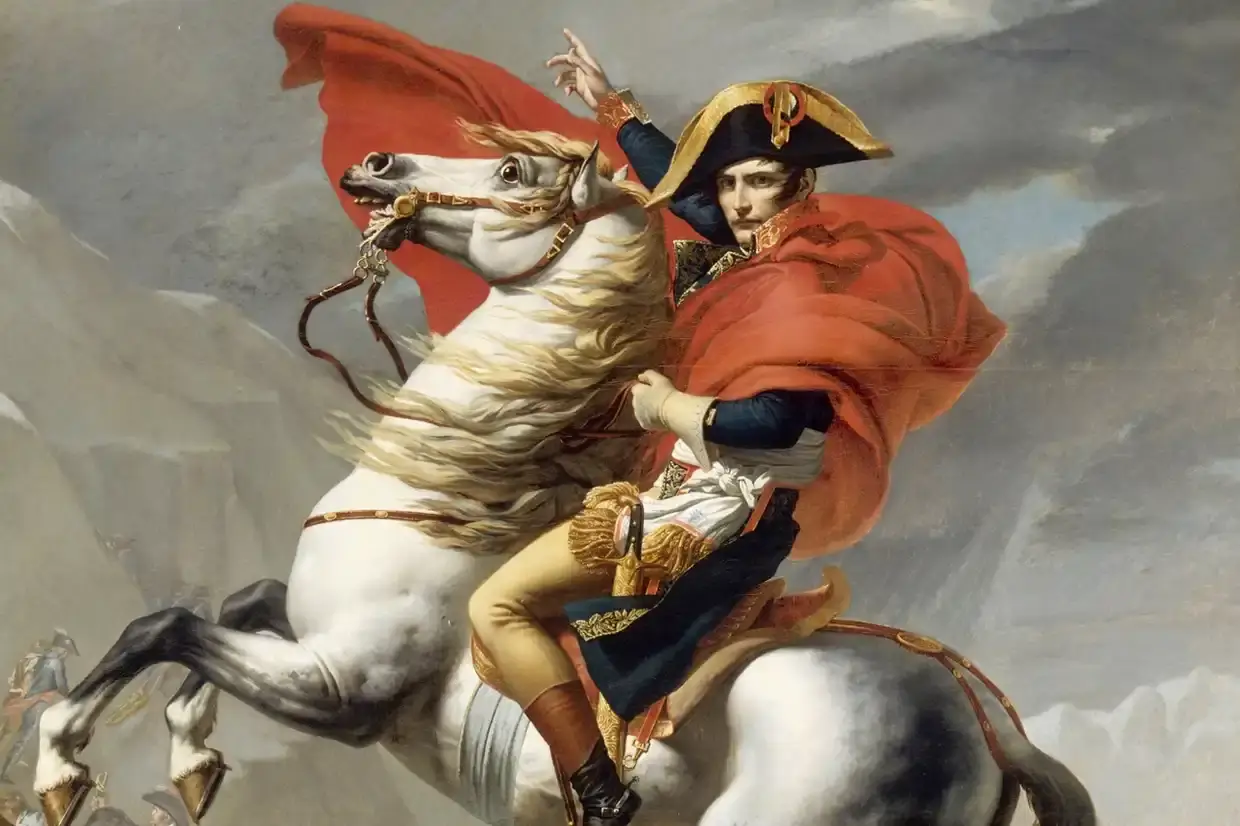
Napoleon Bonaparte’s routine was built around control.
The accounts we have, many of them from people close to him, describe a man who moved quickly through decisions, ate fast, worked hard, and paid surprising attention to personal grooming. Some details vary depending on the period of his life, but the general shape is clear: mornings began with information and administration, and the rest of the day revolved around command.
How Napoleon seems to have started the day
Descriptions of Napoleon’s mornings often include the same core sequence:
- wake around 7 a.m.
- drink tea or an orange blossom infusion
- review correspondence with a secretary
- bathe, shave, and dress
- receive aides, officials, and visitors
That is a revealing start to the day. Before food, before comfort, before anything resembling leisure, he wanted information.
He was fast with work and meals
Napoleon is often described as eating quickly, sometimes finishing lunch in fifteen minutes. He preferred simple food and did not seem interested in turning meals into long events when there was work to do.
That does not mean he ignored pleasure. It means food was not allowed to take over the day.
The same pattern shows up in his work habits. He dealt with messages, orders, and meetings at speed. His schedule had urgency because his role demanded urgency.
He cared a lot about presentation and hygiene
This is one of the more interesting contrasts in Napoleon’s routine.
On one hand, he is remembered as a relentless military and political operator. On the other, he was known for long, very hot baths, careful shaving, and traveling with grooming tools so he could maintain the same standards on campaign.
That tells you something about how he saw authority. Presentation was part of the job. Looking composed, clean, and in command was not vanity in his world. It was part of leadership.
He used ritual to reinforce power
Uniform mattered. Sequence mattered. The order of the morning mattered.
That kind of repetition is useful because it reduces ambiguity. When people operate at scale, ritual can become a way of stabilizing the day. Napoleon’s routine seems to have served exactly that purpose. It created a dependable structure around work that was often anything but predictable.
What this really means is that routine was one of his tools of command.
The routine was intense, not balanced
It would be a mistake to romanticize this schedule too much.
Napoleon’s life was not calm. It was driven by war, administration, strategy, and personal ambition. His routine was effective for that context, but it was not a model of modern wellbeing.
Still, some parts of it are worth noticing:
- start with the most important information
- move through low-value tasks quickly
- keep your standards consistent even under pressure
- use routine to create order in unstable environments
What the routine says about command
Napoleon’s schedule reflects a leader who wanted speed, control, and constant readiness. Fast meals, quick work, careful presentation, and repeated ritual all served that larger aim.
That is what makes the routine interesting. It was not designed to make him comfortable. It was designed to keep him at the center of a machine that moved on orders, perception, and momentum.
Even the personal rituals reinforced authority.
Study the tempo, not the ego
There is an obvious temptation to romanticize figures like Napoleon. That is usually a mistake.
The useful lesson is not his ego or ambition. It is the tempo of the day. He tried to keep decisions moving, maintain personal readiness, and avoid letting comfort slow command. Those are structural ideas, not personality cult material.
So if you study Napoleon at all, study the pace and the discipline more than the legend.
What you can borrow from Napoleon
Not the empire-building part. The structure.
- Begin the day by getting clear on what matters most.
- Do not let meals and minor tasks sprawl across the schedule.
- Create a repeatable morning sequence that puts you in work mode.
- Treat personal upkeep like maintenance, not vanity.
Napoleon’s routine worked because it matched his role. That is the useful lesson here. The best routine is not the most impressive one. It is the one that prepares you for the demands you actually face.