
Most writeups about Steve Jobs try to turn him into a neat little checklist.
That misses the point.
There is no perfectly documented hour by hour Steve Jobs schedule. What we do have is better than that. We have a few recurring patterns from interviews, speeches, and reporting across different periods of his life. Put those together and a clear picture shows up.
He started early. He guarded his attention. He stayed close to the work. And he kept asking whether the work was still worth doing.
Steve Jobs’ day at a glance
- Around 6 a.m.: wake up
- Early morning: quiet work or thinking at home
- Breakfast and family time when he was home
- Around 8 or 9 a.m.: head to Apple
- Monday morning: leadership review and priority setting
- Daytime: product reviews, decision making, recruiting, and problem solving
- Evening: family time, then more thinking or work when needed
The exact timing changed over the years. These are the habits that show up consistently.
He started early and used the morning before the noise
A 1999 Time profile described Jobs getting up around six, working at home for a while if he could, then heading to Apple around eight or nine.
That detail matters because it tells you where he put his best attention.
He did not wait for the day to happen to him. He got to the hard thinking first.
Here is the thing: the first part of the day usually has the least interference. No meeting has gone off the rails yet. No email thread has hijacked your mood. No one has had time to fill your head with their urgency.
Jobs seems to have used that window well. Not for busywork. For thinking.
That is a useful distinction. A lot of people protect the morning, then waste it on inbox cleanup. Jobs appears to have treated it as decision time.
One question kept him honest
In his 2005 Stanford commencement speech, Jobs said that for 33 years he looked in the mirror each morning and asked whether he would want to do what he was about to do that day if it were the last day of his life.
That is not a productivity trick. It is a filter against self-deception.
Most people do not need to ask a question that dramatic every day. But the principle is solid. You need some way to notice drift before drift becomes your life.
What this really means is that routines are not just about efficiency. They are also about alignment. A schedule can be full and still be wrong. Jobs used a hard question to keep checking whether his calendar still matched his convictions.
That is a much better use of reflection than vague journaling prompts that never force a decision.
He ran Apple on focus, not volume
Fortune reported that Jobs started each Monday with a long executive meeting built around one brutal exercise: decide what matters now.
At one point he reduced a list of ten priorities down to three.
That tells you something important about how he worked. Jobs did not believe great work came from doing more things at once. He believed it came from choosing fewer things and pushing them much harder.
People like to repeat that focus means saying yes to what matters. That is only half true. Focus mostly means saying no without apology.
If you want one practical lesson from Jobs’ routine, start here. Build a weekly reset where you cut the list down. Not organize it. Cut it down.
He stayed close to the product
Jobs was not the kind of executive who floated above the work.
Across interviews and reporting, the same pattern shows up again and again. He stayed deep in product decisions, design choices, messaging, launches, and the small details that shaped how the final thing felt to a customer.
That made his days more intense, but it also kept them real. He was not managing abstractions. He was trying to make specific things better.
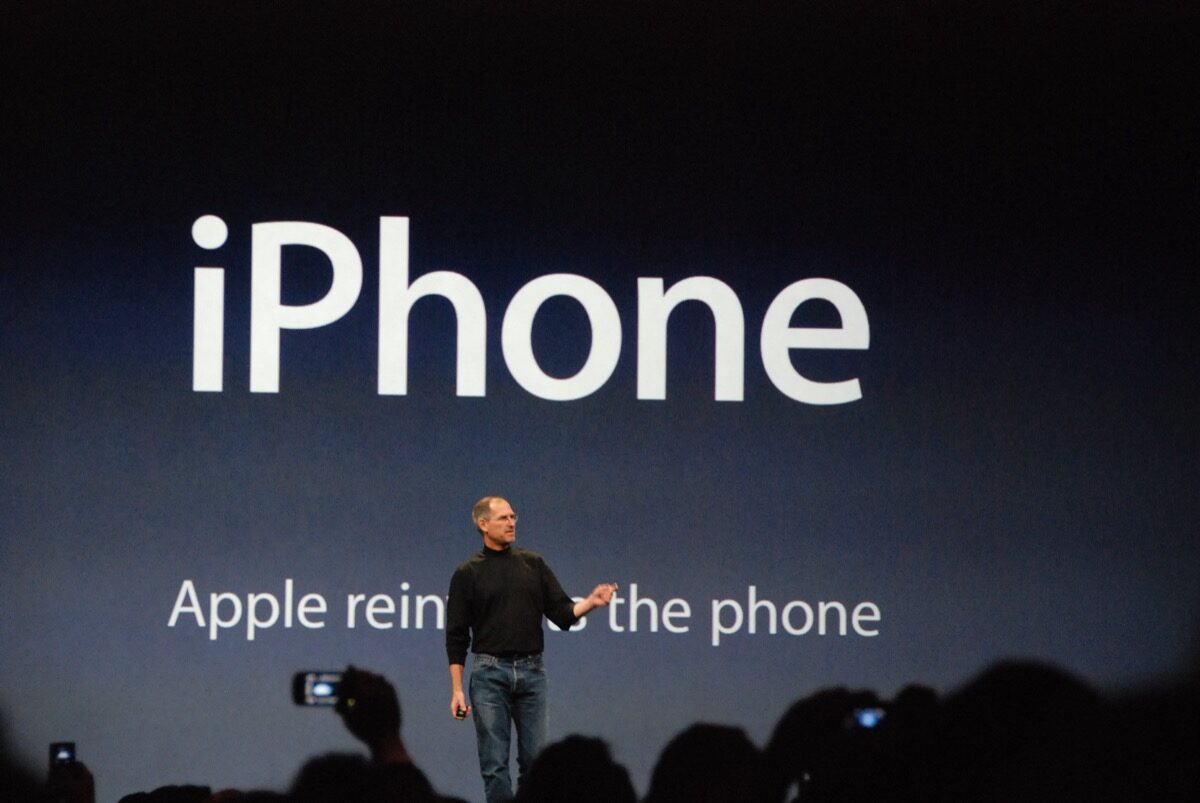
For most people, the takeaway is not to micromanage. It is to stay close enough to the work that your standards still mean something. If you only review dashboards and status updates, your judgment gets soft.
Jobs’ routine seems to have protected against that. He kept coming back to the product itself.
Simplicity was part of the routine
Jobs is often remembered for product launches and keynote lines, but the deeper pattern is subtraction.
The Monday priority meeting is one example. His product philosophy is another. Again and again, he pushed for fewer decisions, fewer distractions, fewer compromises, and fewer mediocre ideas hanging around because nobody wanted to kill them.
That is not just design taste. It is time management.
Every extra priority creates drag. Every half-committed project steals attention from the real one. Jobs appears to have understood that at a very practical level.
The routine lesson is simple. Complexity is not just hard to build. It is hard to live inside.
Why product focus reshaped the day
Jobs’s routine keeps pointing back to the same thing: he wanted his best attention near product quality and the few decisions that shaped it.
That is why focus mattered so much. It was not an abstract virtue. It was the only way to protect craftsmanship at scale. When the product is the argument, meetings, hiring, messaging, and design choices all have to support that central standard.
The day was arranged around protecting that standard from dilution.
What the mirror question was really doing
The famous mirror question gets quoted as inspiration, but it also had a harder function. It forced a confrontation with drift.
That is useful because people can be very efficient at the wrong things for a long time. A routine can help you execute, but it also needs some mechanism that asks whether the execution still points somewhere you actually believe in.
For Jobs, that question seems to have served as a recurring correction. That is why it still lands.
What you can borrow from Steve Jobs
- Use your first hour for thinking, not reacting.
- Ask one hard question every morning that exposes drift.
- Run a weekly priority reset and cut your list to the few things that really matter.
- Stay close enough to the work to judge quality directly.
- Remove projects, meetings, and decisions that dilute your standards.
Steve Jobs’ routine was not admirable because it was tidy. It was useful because it was sharp.
He did not try to build a balanced, optimized, perfectly documented day. He built a day that kept his attention on what mattered most. That is a better goal for almost anyone.



.jpg)
