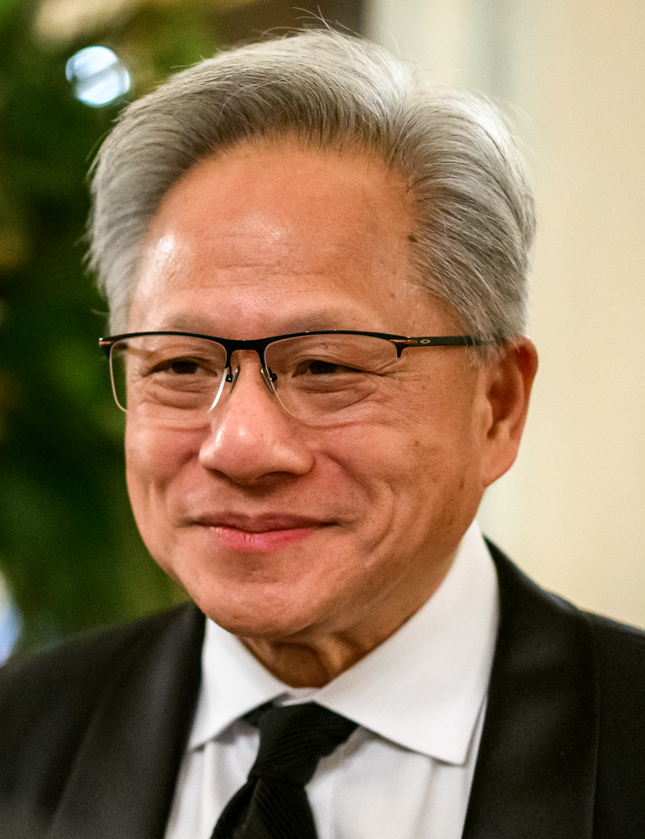
Jensen Huang’s routine is interesting for one reason above all: it does not look like balance theater.
It looks like a system built for pressure.
That matters because Huang is not running a calm lifestyle brand. He is running NVIDIA at the center of the AI infrastructure boom, and as recently as March 3, 2026, the company was still putting him at the center of that story by announcing his March 16 GTC keynote as one of the major events shaping the year.
So the useful question is not whether his day looks pleasant.
The useful question is how he keeps a grip on attention when the scale of the work is absurd.
Jensen Huang’s day at a glance
- Early morning: reportedly up around 4 a.m. for exercise and family time before work
- Morning: reclaim time for the most important decisions instead of letting the calendar run him
- Daytime: product planning, strategy, customer feedback, and a huge volume of leadership conversations
- Ongoing: move fast, compress decisions, and stay close to culture
- Long game: keep priorities clear enough that the company does not get slow, proud, or confused
The day starts early because the real work needs protected time
CNBC reported on May 31, 2024 that the Financial Times had previously described Huang as starting his day at 4 a.m. to exercise and spend time with family before a workday that often runs 14 hours.
That detail is useful, but not because waking up at 4 a.m. is automatically noble.
It is useful because it tells you what he seems to be protecting.
He is trying to create space before the machinery starts. Before meetings. Before requests. Before the company’s momentum claims the whole day.
That is the difference between an early start that actually helps and one that only sounds impressive. Huang’s version appears to be about getting intentional time back before the operating system of a giant company starts making demands.
If you want the small-scale version of that, a pair of adjustable dumbbells or a simple exercise mat is less important than the logic underneath it: train before the day becomes public.
He has been talking about calendar control for decades
One of the clearest windows into Huang’s routine is not new at all.
In a Stanford eCorner talk from January 29, 2003, he said that as a CEO, your time is not always yours and that you need the discipline to make it yours. CNBC revisited that point in 2024 and tied it to a bigger piece of advice Huang gave on the Acquired podcast: do not let Outlook control your life.
That is not productivity fluff. It is operating philosophy.
Here is the thing: a lot of people say they care about priorities, but then they spend all day inside whatever came in last. Huang seems to think backward from impact instead. What deserves his time? What affects the company for the longest period? What can only he do?
That mindset is probably more central to his routine than any wake-up time.
A plain notebook or a desk planner can help, but the real move is much less cosmetic: decide what matters before your inbox does.
He keeps information moving with unusually direct systems
One of the more revealing additions to the public picture came from Fortune on December 13, 2024.
The report described NVIDIA’s long-running “Top-5 Things” emails, short internal notes that help Huang keep tabs on what is happening across the company. The point is not bureaucracy. The point is signal detection. Huang said he wants to detect weak signals early rather than wait for polished reports after the fact.
That fits his routine better than almost any generic leadership quote.
It suggests that a meaningful part of his workday is built around keeping information raw enough to stay useful. He does not seem to want the corporate version of airbrushed reality. He wants short, frequent updates that help him notice problems and opportunities before they become obvious to everyone else.
This is also why email still matters here. Not because it is nostalgic, but because it creates a durable flow of information that can cross teams without turning everything into a performance.
A simple note-taking app on a tablet or even a legal pad is secondary. The real principle is better: build a system that lets weak signals reach you before they become emergencies.
Speed is not a personality trait here. It is part of the system
One of the most revealing recent Huang moments came in WIRED’s December 4, 2024 interview.
Lauren Goode noted that he was in Bangkok in the middle of a world tour. Huang casually mentioned he would be meeting dozens of startups, professors, and government leaders in a single day. When she asked how that many meetings fit into one schedule, his answer was basically this: you just have to go fast.
That sounds obvious until you think about what it requires.
Speed at that level is not random hustle. It depends on short feedback loops, fast comprehension, and a willingness to make decisions without turning every issue into a committee ritual. It also depends on not carrying a lot of vanity around being right the first time.
That last part matters.
Fast leaders who cannot admit mistakes usually become slow organizations, because everyone around them starts hiding bad news. Huang has spent years pushing the opposite idea.
Culture is not a side topic in his routine
That Stanford talk from 2003 is still one of the best guides to how Huang works.
He said corporate culture was probably the single most important thing a CEO or entrepreneur should invest time in. He talked about innovation, intellectual honesty, and the ability to admit mistakes early.
That may sound abstract, but it changes the day-to-day routine in a very concrete way.
If culture matters that much, then conversations matter. Hiring matters. Repetition matters. The way criticism gets delivered matters. What leaders tolerate matters.
CNBC also noted in 2024 that Huang has described being the custodian of culture as one of his most important responsibilities. That gives you a better read on why he spends so much time with employees and why so much of his routine seems built around directness instead of insulation.
What this really means is that his routine is not just about output. It is also about keeping the company psychologically honest.
He spends much of his time growing leaders, not just shipping products
Another Stanford eCorner talk, this one from April 8, 2009, adds a useful layer.
Huang said he spent most of his time with general managers and leaders helping them think through strategy, product roadmaps, transitions, team building, and organization design. He also argued that old-school succession planning that narrows the future down to a tiny hand-picked list is toxic.
That matters because it changes how we should picture his day.
It is easy to imagine a founder-CEO routine as a nonstop string of product reviews and investor calls. Huang’s own explanation suggests something broader. A lot of the job is multiplying judgment through other people. Helping leaders think better. Helping teams grow enough internal capacity that the company is not dependent on one person’s heroics forever.
That makes the routine more interesting, not less.
It means his schedule is probably full of conversations that are not only about the next quarter. They are about building people who can carry more of NVIDIA’s future.
Urgency appears in the behavior, not just the speeches
The old 2003 Stanford clip on vision is still useful because Huang made a point many leaders say but do not live.
He said urgency gets communicated through action. If the leader works with intensity, purpose, and care, the organization picks it up. That is a very practical description of how routines spread inside a company.
This helps explain why his public comments feel so consistent across two decades. Calendar control, speed, clear communication, leadership development, and culture are not separate themes. They are all parts of the same operating logic.
The routine is how the standard becomes visible.
He seems to spend time where leverage is highest
CNBC’s 2024 summary of Huang’s work habits said he focuses on the places where he can have the greatest positive impact on NVIDIA and its employees, including product planning, strategy, and customer feedback.
That is a sharp clue.
He is not trying to touch everything evenly. He is trying to work where leverage is highest.
This is one of the more practical lessons in his routine. Most people lose a lot of time because they confuse responsibility with equal attention. Huang’s example suggests the opposite. The job is not to distribute your attention politely. The job is to place it where it changes the result.
For a founder or operator, that might mean product and hiring. For someone else, it might mean clients, code quality, or sales conversations. The categories change. The principle does not.
The workload is extreme, but the logic is portable
There is no point pretending Huang’s life is normal.
It is not.
The current version of NVIDIA is too large, too strategic, and too visible for that. Between earnings, customer relationships, policy attention, product launches, and global travel, his day is closer to controlled compression than to ordinary work-life balance.
But the logic underneath it still transfers.
Protect early time. Refuse calendar drift. Spend energy where leverage is highest. Stay close to the real work. Build a culture where truth can move quickly.
A standing desk or noise-canceling headphones will not turn anyone into Jensen Huang. But they can support the same larger point: structure your environment so important thinking is more likely to happen.
Related video: NVIDIA's GTC 2026 keynote highlights show the pace, clarity, and scale Huang is operating at right now.
He does not seem interested in performative optimization
This is another reason his routine is worth studying.
There is very little evidence that Huang is obsessed with lifestyle branding. No elaborate seven-step morning ritual. No public fascination with hacks for their own sake. No polished myth about effortless genius.
Instead you get something much more useful:
- exercise because the workload is real
- prioritize because the calendar will eat you alive
- stay near products and customers because strategy drifts when leaders get too abstract
- work on culture because speed without truth eventually breaks
That simplicity is easy to miss because the company around him is so complex.
But in some ways that is exactly the lesson. The more complicated the environment gets, the more the routine has to return to first principles.
The deeper lesson is ownership
Huang’s routine seems built around a stubborn idea: your attention is too expensive to hand away by accident.
That is why the early start matters.
That is why the calendar comments matter.
That is why culture keeps showing up.
That is why speed shows up too. Not as theatrics, but as a way to keep reality moving through the company before bureaucracy hardens around it.
Most people do not need Huang’s schedule.
But a lot more people could use Huang’s standard. Know what deserves your best hours. Protect those hours aggressively. Let truth move fast. Do not let administrative noise become your life.
What you can borrow from Jensen Huang
- Protect time before the day gets claimed by other people.
- Do not let your inbox become your boss.
- Put your energy where leverage is highest.
- Build systems where bad news can surface early.
- Treat culture like part of the work, not a speech about the work.
Jensen Huang’s routine is useful because it strips leadership down to something more concrete than charisma.
Attention. Priority. Speed. Honesty. Repetition.
That is a much better recipe than most advice in this category.
Sources
- NVIDIA Newsroom on GTC 2026, published March 3, 2026
- CNBC on Jensen Huang’s work and time-management advice, published May 31, 2024
- WIRED interview with Jensen Huang, released December 4, 2024
- Fortune on NVIDIA’s “Top-5 Things” email system, published December 13, 2024
- Stanford eCorner: “The Power of Corporate Culture,” January 29, 2003
- Stanford eCorner: “How a CEO Spends Time,” January 29, 2003
- Stanford eCorner: “Cultivating Next-Generation Leaders,” April 8, 2009
- Stanford eCorner: “Conveying Vision to Employees,” January 29, 2003
- NVIDIA GTC 2026 keynote highlights on YouTube
- Featured image source on Wikimedia Commons