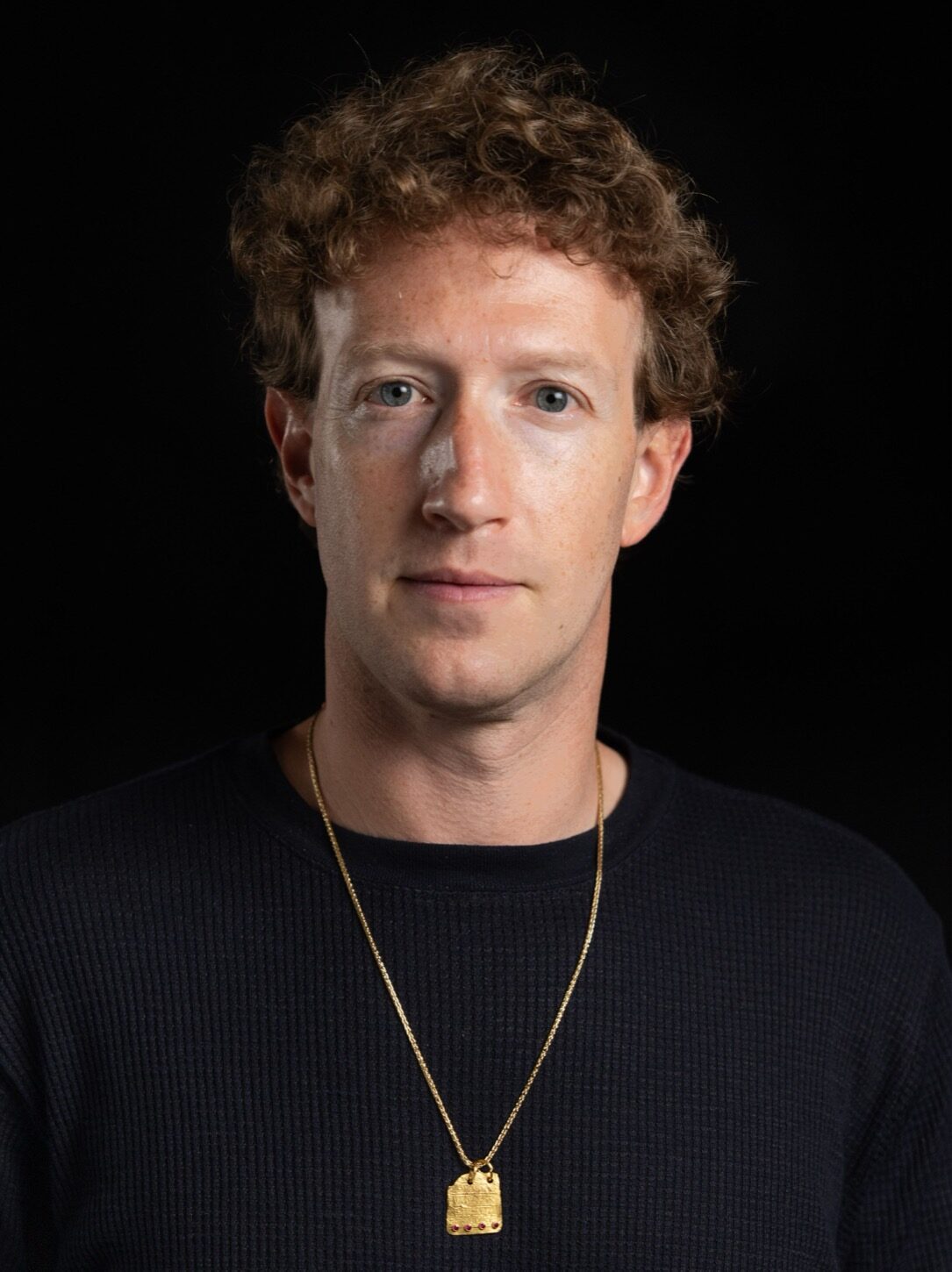
If you are looking for a perfectly mapped 5 a.m. to 10 p.m. schedule, Mark Zuckerberg is not a clean case.
What is public is more useful than a fake timetable anyway. Over the years, he has shared enough fragments through interviews, posts, and public appearances to show the real pattern. His days seem to revolve around four things: reducing low-value decisions, protecting physical intensity, staying close to the product, and leaving room for actual thinking.
That combination matters more than whether he drinks coffee at 6:12 a.m.
Zuckerberg’s day at a glance
- Morning: keep the start simple and cut unnecessary choices
- Early day: training or physical work that forces full attention
- Main workday: focused product and leadership work at Meta
- Ongoing: spend real time thinking about long-term direction, not just reacting
- Long game: keep adding hard challenges instead of settling into executive autopilot
That is the routine underneath the headlines.
He tries to remove trivial decisions
One of the oldest and most reliable details about Zuckerberg’s routine is the gray T-shirt habit.
The point was never fashion. It was mental conservation. He has said he wanted to clear his life so he made as few decisions as possible about anything that did not actually matter to his work or mission.
Here is the thing: people love making fun of this idea until they notice how much energy disappears into tiny choices.
You do not need to wear the same shirt every day to understand the principle. The useful part is deciding once instead of deciding fifty times. Meals, workout times, meeting formats, your default work setup, even where you put your phone during deep work all work the same way. If a choice repeats constantly and adds little value, routine is usually better than reconsidering it every morning. A plain gray t-shirt is almost comically literal here, but it does capture the broader point.
Physical training looks like a reset button, not a side hobby
This is where Zuckerberg’s routine has changed the most over time.
Earlier on, he used running challenges to make exercise more consistent. More recently, he has talked far more about martial arts, jiu-jitsu, and the value of activities that demand complete focus. That shift makes sense. Running leaves room to think. Combat training does not. If you are sparring or drilling, you are there or you get exposed immediately. Good running shoes or a jiu-jitsu gi both fit the broader idea: choose training that fully takes your attention.
That makes training useful for more than fitness. It becomes a forced mental reset.
For someone running a company as large and noisy as Meta, that is probably the real benefit. Training gives him one part of the day where the internet, the headlines, and the management stack do not matter. There is only the next move.
What this really means is that his workouts do more than keep him in shape. They create separation from the cognitive churn of the job.
He seems to care more about product time than executive theater
A lot of founders slowly drift into a routine that is basically meetings about meetings. Zuckerberg does not seem especially interested in that version of leadership.
In public interviews, he consistently sounds like someone who still wants to be close to the product itself. Older reporting described him as spending about 50 to 60 hours a week in the office while also thinking about Facebook’s mission well beyond office hours. More recent conversations show the same basic instinct at Meta: stay hands-on, stay close to what gets built, and stay involved in the long-term bets.
That is a useful distinction.
There is a big difference between being busy and staying close to the work that actually compounds. One produces calendar density. The other produces leverage.
Zuckerberg’s routine seems optimized for the second one.
He treats thinking time as part of the job
This is easy to miss because it does not look dramatic from the outside.
Zuckerberg has talked publicly about spending a lot of time thinking about the mission, not just the visible work of running the company. He has also built personal challenges around learning, including a year-long book challenge that pushed him to read across history, science, culture, and politics.
That tells you something important about how his routine works. It is not purely operational. He does not seem to treat leadership as a nonstop chain of responses. He appears to leave room for input, reflection, and deeper model-building.
That matters because high-pressure roles punish shallow thinking. If you only react, the day wins. If you carve out time to absorb ideas and think in longer arcs, you have a chance to lead instead of just absorb impact.
His routine is built around intensity, not balance content
This is the part a lot of routine posts get wrong.
Zuckerberg’s schedule is not interesting because it is calm. It is interesting because he seems to know exactly where to place structure inside a very intense life.
He simplifies what can be simplified. He makes movement non-optional. He stays close to the thing the company is building. He keeps learning. He tries not to let the whole day dissolve into passive screen time and managerial fog.
That is a real routine. It is not soft. It is not especially aesthetic. But it looks functional.
What simplicity buys him
A lot of the routine is about preserving bandwidth for product and strategy instead of leaking it into trivia. The same shirt, direct work blocks, and regular physical training all point in that direction.
Simplicity matters here because his job already generates enough complexity on its own. The routine removes small bits of drag so more attention can stay on building, deciding, and adapting.
That is the practical core beneath the public image.
Where the routine becomes less transferable
It is still worth being honest about the limits. Zuckerberg’s day sits on top of enormous resources, highly unusual responsibilities, and a scale most readers will never experience.
So the useful move is not imitation. It is translation. Ask what low-value decisions you can remove, what training sharpens you, and how to spend more time close to the work that actually matters.
That keeps the principle while dropping the fantasy that another person’s calendar can be copied whole.
What you can borrow from Zuckerberg’s routine
- Remove one recurring decision that never deserved daily attention.
- Pick exercise that fully occupies your mind, not just your body.
- Stay closer to the real work and farther from performative busyness.
- Protect time for reading, thinking, and long-range judgment.
- Keep one hard challenge in your life so growth does not stop when comfort arrives.
You probably should not copy Zuckerberg literally. Most people do not run Meta, and most people do not need founder-level intensity every day.
But the core lesson is strong: simplify the trivial stuff so you can spend more energy on the difficult stuff that actually matters.
Sources and image notes
- CNN Money on Zuckerberg’s running challenge
- CNN Money profile on how he thought about work and mission
- Lex Fridman transcript on physicality, sports, and not sitting at a desk all day
- Acquired interview overview and transcript page
- Wikimedia Commons image page for the featured photo, licensed CC BY-SA 4.0

_(cropped).jpg)