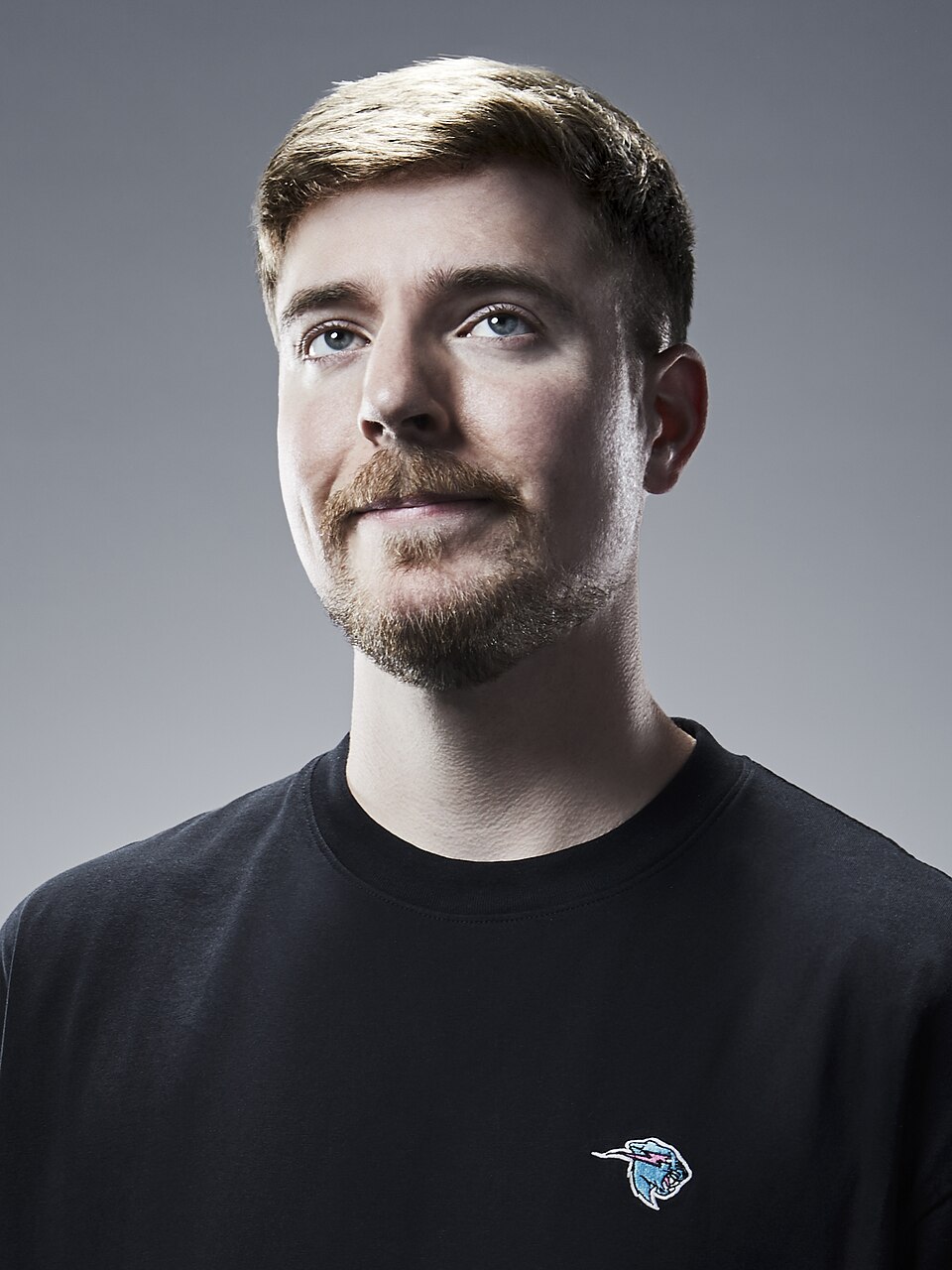
MrBeast’s routine is not a tidy self-help routine.
It is a creator-industrial routine.
That is what makes it worth studying.
Jimmy Donaldson is not optimizing for serenity. He is optimizing for output, audience response, and scale. As of January 14, 2026, he was still telling WIRED that a huge chunk of his past year had gone into Beast Games Season 2, which was released on Prime Video on January 7, 2026.
So if you are looking for a balanced little list about green juice and gratitude, this is the wrong person.
If you want to understand what happens when someone’s whole life is organized around making better videos, bigger projects, and stronger audience reaction, he is one of the clearest case studies alive.
MrBeast’s day at a glance
- Morning to night: work that revolves around ideas, filming, edits, thumbnails, and audience response
- Filming stretches: long production days that can run for hours and repeat most of the month
- Ongoing: obsessive improvement, constant iteration, and reinvesting money into new content
- Support structure: trainer, chef, and systems that help him keep producing
- Personal life: intentionally limited public exposure so work and recovery do not collapse
The routine is built around obsession, not balance
TIME’s May 2024 profile on Donaldson is one of the best sources on how he actually lives.
It reported that he has 15-hour filming days 20 to 25 times per month and spends many of the remaining days on Feastables. That alone tells you this is not a creator routine in the casual sense. It is much closer to a founder-operator routine, except the product is attention.
That also explains why so much of his life seems to point in one direction.
He does not present himself as someone trying to keep YouTube in a healthy little box. He has built a life where the work is the box. The ideas, the shoots, the analytics, the reinvestment, the production scale, the next format. They are not side projects. They are the system.
There is a cost to living that way, of course.
But there is also clarity.
Improvement seems to be the real daily habit
One of the sharpest details from MrBeast’s January 14, 2026 WIRED interview had nothing to do with money.
He said that if you look at something you made six months ago and do not see ways it could be improved, then you are probably not evolving enough. He also talked about constantly second-guessing thumbnails and said there is no such thing as a perfect piece of content.
That matters because it reveals the real routine underneath the public spectacle.
His daily habit is not only filming.
It is critique.
Look again. Tighten again. Change the thumbnail. Improve the pacing. Make the idea hit harder. Make the audience feel more.
That is a much more useful lesson than “work hard.” Plenty of people work hard inside systems that never improve. Donaldson’s edge seems to come from the fact that he is hard to satisfy.
A whiteboard or a legal pad will not create a MrBeast business. But they support the same principle: ideas need to be externalized, attacked, and rebuilt.
The storytelling system is more deliberate than it looks
TIME’s June 2023 breakdown of one of Donaldson’s record-setting yacht videos helps show what this obsession looks like in practice.
The publication noted how the video used aggressive retention mechanics: an eye-catching thumbnail, a strong title, subtitles, frequent graphics, hooks, transitions, and even on-screen watermarks that reminded viewers what they were watching and what was still coming. It also noted that he withheld the biggest payoff until the final minutes instead of showing the most expensive yacht immediately.
That is not just editing taste. It is routine.
It means the daily work is partly structural. Where does the hook land? When do you reveal the best thing? How do you keep the audience oriented without letting the energy drop? Donaldson’s success makes a lot more sense once you realize that his routine probably includes constant decisions at that level of granularity.
If you want the practical version, a storyboarding notebook or editing keypad is not the point by itself. The real takeaway is that strong content usually comes from structure, not just enthusiasm.
Reinvestment shapes the whole rhythm of his life
MrBeast has said versions of this for years, and he said it again in the WIRED interview: he reinvests most of his money into content and does not do much besides film.
TIME’s 2024 profile backs that up. Donaldson said he was not rich “right now” because whatever they make gets reinvested. The article described budgets that keep climbing and a creative operation willing to spend enormous sums to produce the right feeling on screen.
That is one of the clearest clues to his routine.
He is not extracting from the machine.
He is feeding it.
That changes daily behavior. It changes spending decisions. It changes risk tolerance. It changes how personal time competes with business ambition. Once someone is wired that way, the routine stops being about lifestyle management and starts being about maintaining momentum.
The filming days are long because the standard is high
TIME’s reporting on 15-hour filming days helps make sense of everything else around him.
If your month is packed with shoots that long, then the rest of the routine has to support endurance. You need enough energy to think during production. Enough operational discipline to keep creative quality high late in the day. Enough recovery to do it again.
This is where Donaldson looks more like a coach or a showrunner than like the average YouTuber.
The work is industrial. The hours are real. The scale is real. The standards appear to be very real too.
That does not mean everyone should copy it.
It does mean people should be honest about what high-output creative work often costs.
TIME’s May 2024 reporting makes that cost easier to picture. The company had around 300 employees on the production side and roughly 200 more at Feastables, according to the profile. That is not a creator and a camera operator. That is a full operating system, and routines at that scale stop being personal quirks and start becoming management infrastructure.
Fitness is probably less vanity than maintenance
The Colin and Samir interview from June 2024 is helpful here, even from the show notes alone. The conversation explicitly includes sections on focus, fitness, stress, and work-life balance. TIME adds another important detail: people around Donaldson had started protecting him from collapsing under his workload, including through a personal chef and trainer.
That combination tells you something.
Fitness in this routine is not the main story, but it is still part of the operating system. If filming days are huge and pressure is constant, training stops being mostly aesthetic. It becomes maintenance for stress, mood, and physical stamina.
That is a pattern worth stealing.
People who do intense cognitive or creative work often pretend the body is separate from the output. It is not. A walking pad, protein shaker bottle, or meal prep containers can help keep the basics easy enough that work does not wipe them out.
TIME added another revealing detail in 2024: people around Donaldson had started trying to protect him from the strain of his workload, and he now had a personal chef and a trainer. That does not make the routine soft. It makes it sustainable enough to keep running.
He is trying to make people feel something, not just click
This is one of the most important changes in his public thinking.
In the WIRED interview, Donaldson said he used to focus more on views. More recently, he said, the question has become how a video makes people feel. TIME reported something similar in 2024 when he described chasing reactions like “How did they do that?” or “Is that real?”
That shift matters because it changes the whole routine.
If the goal is not only traffic but emotional intensity, then every layer of production gets judged differently:
- the idea has to be stronger
- the pacing has to be cleaner
- the visual scale has to feel bigger
- the stakes have to feel more real
That is why his routine can look extreme from the outside. He is not optimizing for volume alone. He is optimizing for impact.
Comments and audience signals are part of the feedback loop
Another strong detail from the TIME 2024 profile is that Donaldson said he finds constructive criticism in the comments.
That matters because it shows how open the loop is. Many people publish and then emotionally flee. MrBeast seems to do the opposite. He watches the reaction, studies what lands, and keeps turning audience response into production input.
That also helps explain why his routine probably feels relentless. If every upload becomes fresh data, then the work never fully goes cold. It becomes the raw material for the next improvement cycle.
Privacy seems to function as a defensive habit
TIME reported that Donaldson has a simple way of dealing with fame: he does not go out in public much.
That may sound antisocial, but it also looks practical.
If public exposure quickly turns into crowds, interruptions, and lost energy, then privacy becomes part of the routine. Not as mystery. As logistics. A person at his scale cannot casually live the same way an ordinary creator can.
This is worth noting because it changes how we interpret “work-life balance” in his case. He may have more personal limits now than earlier in his career, but the limits still seem designed mainly to preserve the ability to keep working.
That is not a criticism. It is just the shape of the system.
TIME’s 2025 creator profile helps show the size of the challenge. It said Donaldson had more than 400 million YouTube subscribers, plus another 193 million across TikTok and Instagram. At that scale, privacy is not a preference. It is operational protection.
Related video: Colin and Samir's long-form conversation with MrBeast is one of the best windows into how he thinks about focus, fitness, stress, and creator work.
Beast Games shows what the routine grows into at scale
Donaldson’s January 2026 WIRED interview is useful here because it shows the current endpoint of the routine.
He described Beast Games Season 2 as a massive undertaking involving a new city, huge sets, enormous infrastructure, and a production process built around authenticity rather than scripted contestant moments. He said Season 1 alone involved more than $20 million just to build the city for contestants to live in, and that the crew used 1,000 cameras in order to keep people being themselves instead of forcing reality-show dialogue.
Even if you ignore the wow factor, this tells you something important.
His routine is increasingly about systems, not just videos.
At that scale, his day has to include judgment across production design, storytelling, hiring, editing, quality control, and business coordination. The routine that once made YouTube videos now has to support a media company.
Amazon’s November 18, 2025 announcement adds a few details that sharpen the picture. It said Season 2 would feature 200 competitors in a “Strong vs. Smart” format for a $5 million prize, that Season 1 became Prime Video’s most-watched unscripted show ever with 50 million viewers after 25 days, and that the show had already been renewed for a third season.
That matters because it confirms this is no longer just a YouTube rhythm. It is now a franchise rhythm.
The daily routine has to be strong enough to support not just uploads, but expansion into large-format entertainment with weekly release pressure and much bigger organizational complexity.
Why this routine is more practical than it looks
Most people should not try to live like MrBeast.
But a lot of people could learn from the engine under the lifestyle.
Obsess over improvement.
Reinvest in quality.
Support the body so the work can keep happening.
Judge output by how it lands, not just by whether it shipped.
Protect enough privacy and structure that attention does not get shredded.
What this really means is that MrBeast’s routine is not actually about chaos. It is about building an environment where creative obsession can keep producing without falling apart completely.
That is much less glamorous than the videos.
It is also the reason the videos exist.
What you can borrow from MrBeast
- Make improvement a recurring habit, not a yearly event.
- Reinvest in the parts of the work that actually raise quality.
- Build systems that help you survive long production stretches.
- Judge work by audience response, not by your effort alone.
- Protect enough privacy and recovery to keep going.
MrBeast’s routine is useful because it shows what creator ambition looks like when it stops pretending to be casual.
It becomes a life system.
And once you see that clearly, a lot of his success starts making more sense.
Sources
- About Amazon on Beast Games Season 2, published November 18, 2025
- WIRED autocomplete interview with MrBeast, released January 14, 2026
- TIME profile of MrBeast, published May 30, 2024
- TIME on MrBeast’s yacht video strategy, published June 2023
- TIME100 Creators 2025 profile on Jimmy Donaldson
- Colin and Samir conversation with MrBeast
- YouTube video: A Brutally Honest Conversation with MrBeast
- Featured image source on Wikimedia Commons