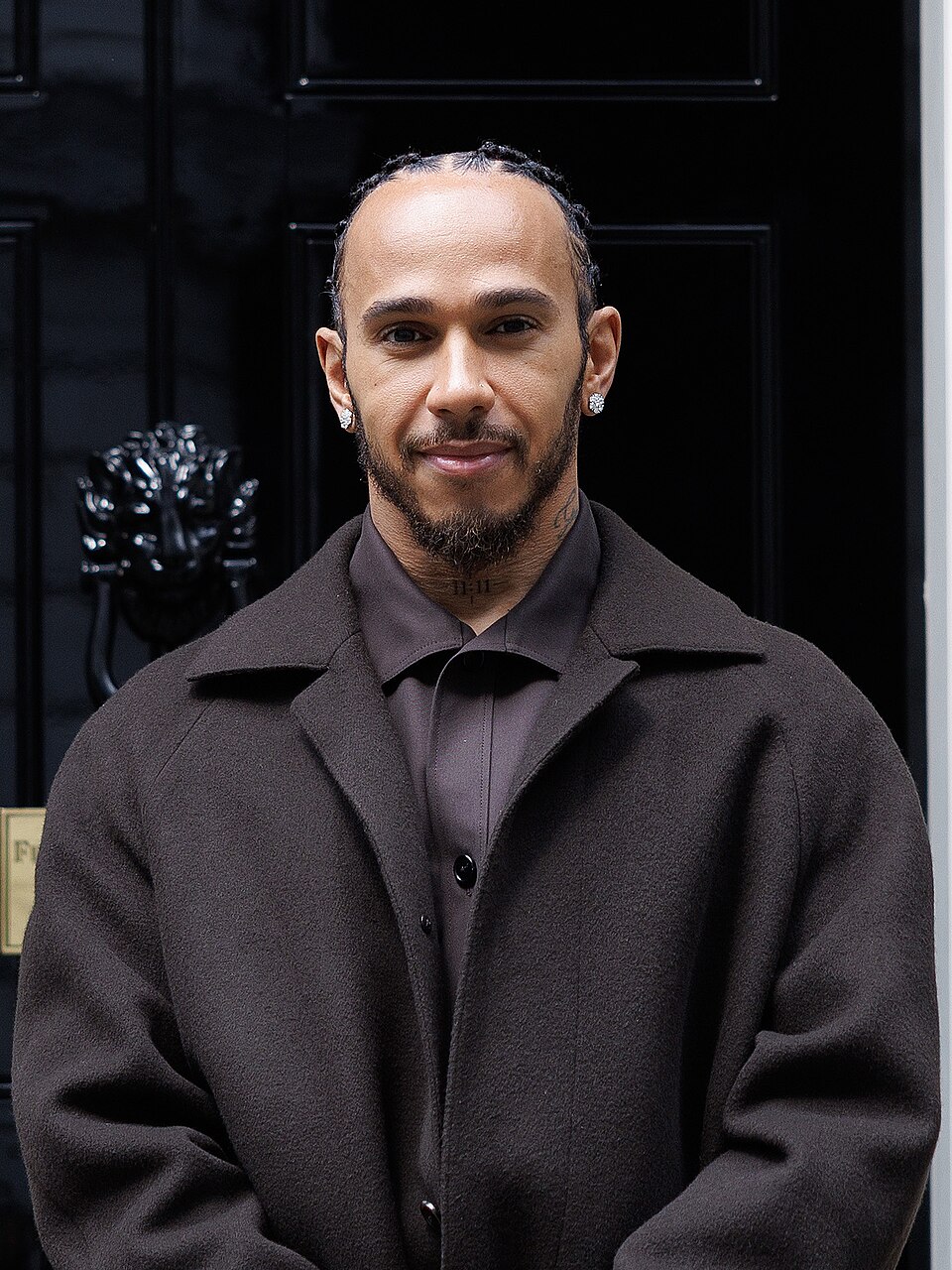
Lewis Hamilton’s routine is worth studying because it answers a hard question.
How do you stay elite when the sport is still brutal, the calendar is still global, and your body is not 25 anymore?
That question matters even more right now. On March 5, 2026, Hamilton said his goal for the new Ferrari season was simple: win. In that same Formula 1 interview, he said a lot of his positive offseason mentality came from training hard starting on Christmas Day.
That is the useful frame for this post.
Not celebrity wellness. Not luxury habits. A routine designed to keep a 41-year-old driver physically sharp, mentally steady, and emotionally dangerous in one of the most unforgiving sports on earth.
Lewis Hamilton’s day at a glance
- Morning: wake up, move early, and get the body online
- Training blocks: cardio, strength, core work, neck work, and mobility
- Ongoing: recovery, stretching, and body maintenance
- Food: plant-based eating that supports energy, weight, and consistency
- Mental side: reset the mindset, stay present, and keep confidence from becoming fragile
The body has to be built for a very specific job
People still underestimate what Formula 1 asks from the body.
Hamilton explained it clearly in MasterClass. Races run roughly an hour and 45 minutes to two hours. Drivers lose huge amounts of water weight. Heart rates stay high for long stretches. The work is not only about reflexes. It is about sustaining control under heat, fatigue, braking force, and constant concentration.
He also described the physical details in a way that makes the training logic obvious:
- core stability matters because the body is constantly being thrown around
- hips and glutes matter because of repeated pedal pressure
- neck strength matters because the head and helmet effectively get much heavier through corners
That is why Hamilton’s routine is useful. It is not generic fitness. It is training shaped by actual demand.
This is the first rule of a serious routine. Train for the work, not for the vibe.
If you want a simpler version of that principle, a set of resistance bands, a yoga mat, or a foam roller can support the same idea: build capacity that matches what your life actually asks from you.
His training seems to have gotten smarter with age
This is where Hamilton becomes more interesting than a younger athlete.
According to Motorsport.com in a December 31, 2025 report, Hamilton talked about how his training has changed over the course of his Formula 1 career to keep him mentally and physically strong at 40. That matters because longevity in elite sport is rarely about more suffering. It is usually about more precision.
Older athletes who stay great tend to do a few things differently:
- they respect mobility instead of treating it like filler
- they recover on purpose
- they keep training specific instead of maximal for its own sake
- they notice what helps them arrive fresh, not just what leaves them exhausted
Hamilton’s public comments line up with that pattern.
The point is not that he has become soft. It is that he seems less interested in junk effort. At this stage, every session has to earn its place.
Mobility is not optional when your job depends on control
One of the easiest mistakes people make when copying athlete routines is focusing only on the spectacular parts.
Heavy lifts. Sprints. Punishing intervals.
But Hamilton’s work only makes sense if mobility and recovery are treated like core responsibilities. A tight driver is a worse driver. A fatigued driver is a slower thinker. A body that cannot reset between races becomes a liability fast.
That is one reason Hamilton’s routine has long been associated with stretching, body maintenance, and movement quality rather than brute training volume alone.
What this really means is that performance often depends on what happens between the glamorous efforts.
A massage gun or mobility stick is not magic. But they point at the right lesson. If your body is the delivery system, maintenance is real work.
Recovery has become one of the clearest parts of the system
British GQ’s August 22, 2022 interview with Hamilton fills in a lot of the practical detail that short race-weekend interviews miss.
He said recovery had become a real focus for him and described the day after a race as a complete day off dedicated to self-care. He mentioned cryotherapy, pool work, physio, acupuncture, and steam room time. He also admitted that when he was younger he did not stretch before or after getting in the car, but now treats stretching as important.
That is exactly the kind of detail that makes a routine believable.
It shows how elite longevity often works in real life. The glamorous part is the race. The less glamorous part is protecting the body hard enough that another race can happen next week. Hamilton’s routine looks much more mature in that light. He is not trying to be indestructible. He is trying to stay available.
Sleep and decompression are active projects, not happy accidents
The same GQ interview makes another thing clear: Hamilton does not seem to assume recovery will happen automatically.
He said he is not the best sleeper, that he moves around a lot in his sleep, and that he uses blue blockers from 6 p.m. onward to get off his phone. He also said reading helps put him to sleep.
That detail matters because it shows something a lot of ambitious people resist: even elite performers have to build friction against stimulation.
Hamilton also described surfing as phone-free time that helps clear negative energy, and said part of his meditation is running. That is a strong clue that his routine is not only about physical readiness. It is also about finding reliable ways to quiet the noise.
If you want a practical version of that, blue light blocking glasses or a Kindle can help create the same cutoff between high stimulation and actual rest.
Training is doing mental work too
The March 2026 Formula 1 interview is revealing because Hamilton did not talk about confidence as some mystical feeling.
He talked about cultivating a positive mental attitude and said a lot of it came from training.
That is a serious point.
Training is not only about muscle or endurance. It can also be a way to restore self-trust. When an athlete has put in undeniable work, the mind has something concrete to stand on.
That helps explain why Hamilton’s comments about rediscovering himself matter. He was not describing abstract motivation. He was describing a return to identity through action.
Many people wait to feel better before they act better. Elite performers often reverse that. They act their way back into stability.
The routine has to survive travel, pressure, and constant visibility
Hamilton’s life is not only sport. It is also airports, sponsor work, media obligations, engineering meetings, team adaptation, and the weird pressure of being one of the most visible athletes on earth.
That is why a routine like his cannot be precious.
It has to travel.
It has to work in hotel rooms, paddocks, gyms, tracks, and between time zones. It has to hold together when sleep is imperfect and the weekend is already overloaded. A rigid fantasy schedule would break under that kind of pressure. Hamilton’s real routine seems more principle-based than clock-based, which is exactly what you would expect from someone living on a global race calendar.
That is one reason the current Ferrari chapter matters. Formula 1 reported in March 2026 that Hamilton felt more settled entering his second season with the team. More familiarity with the environment means less wasted energy. Routine gets easier when the surrounding system becomes more legible.
There is another useful detail here from Formula 1’s May 2023 reporting after Hamilton’s split with longtime physio Angela Cullen. He described a revised support setup with roles shared across multiple people and called it a great support structure.
That tells you his routine is not a solo act.
By this point in his career, the system around him is part of the routine itself. Trainer support, physical care, race engineering relationships, and trusted personnel all help preserve energy that would otherwise get burned on logistics and friction.
Food is part of the performance equation
Hamilton’s plant-based eating is not interesting because it is trendy.
It is interesting because it fits the broader logic of his routine: reduce drag, support recovery, and keep energy more consistent across a punishing calendar.
He has spoken publicly for years about eating in a way that supports performance and values. Whether someone copies the exact diet matters less than understanding why diet sits inside the routine in the first place.
For high performers, food is less about entertainment during the season and more about support. It is fuel, recovery, body composition, and inflammation management all at once.
That does not require becoming fanatical. It does require honesty.
If you want a practical version of the idea, plant-based protein powder or meal prep containers are not glamorous, but they make consistency easier.
Related video: this day-in-the-life look at Lewis Hamilton helps show how training, travel, and preparation fit together in real life.
He seems to understand that reinvention is part of longevity
This is probably the deepest lesson in Hamilton’s routine.
Plenty of talented people know how to get good.
Fewer know how to stay good once the environment changes.
Hamilton has had to survive different eras of cars, different teammates, different rules, different public narratives, and now a new chapter at Ferrari. If he were still relying on the exact same version of himself from a decade ago, he would not still be relevant.
That is why the routine matters. It is one of the places reinvention becomes visible.
Training changes. Recovery changes. The mental approach changes. The environment changes. But the standard stays high.
You can see that in the way he talks now. Less fantasy. More presence. More work. More deliberate self-correction.
Formula 1’s 2024 coverage of Hamilton’s first win after almost 1,000 days without one adds another layer. He called that period a battle of the mind and said he had learned to be a better teammate because there was more time to focus on communication.
That is not a throwaway detail.
It suggests the routine matured socially as well as physically. Better communication with the team, deeper emotional control, more deliberate resetting after setbacks. Those are not extras in Formula 1. They are part of performance.
Why this routine is more useful than it first appears
Most readers are not trying to survive two-hour races at elite speed.
But many are trying to perform while aging, traveling, recovering from setbacks, or staying sharp through long seasons of pressure.
That is why Hamilton’s routine travels so well.
Train for the actual demand.
Respect recovery.
Keep mobility in the plan.
Use physical work to steady the mind.
Adjust the system as your body and job change.
Those are not Formula 1 lessons. They are adult performance lessons.
What you can borrow from Lewis Hamilton
- Train for the specific demands of your work.
- Make mobility and recovery part of the real plan.
- Let training rebuild confidence when your mindset slips.
- Keep nutrition practical enough to support consistency.
- Evolve the routine as your body and season change.
Lewis Hamilton’s routine works because it is not built on denial.
It respects the body, the calendar, and the pressure of the job.
That is usually where durable excellence starts.
Sources
- Formula 1 on Hamilton’s 2026 goals and offseason mindset, published March 2026
- Motorsport.com on Hamilton’s training routine, published December 31, 2025
- MasterClass preview: “Optimize Your Body for Performance”
- British GQ on Lewis Hamilton’s wellness and recovery routine, published August 22, 2022
- Men’s Health on Hamilton’s training and weight/cardio balance, published July 16, 2020
- Formula 1 on Hamilton’s fitness team setup, published May 2023
- Formula 1 on the mindset lessons from Hamilton’s winless run, published 2024
- A day in the life of Lewis Hamilton on YouTube
- Featured image source on Wikimedia Commons